Virginia Woolf Letter Dismissing Her Work to Auction
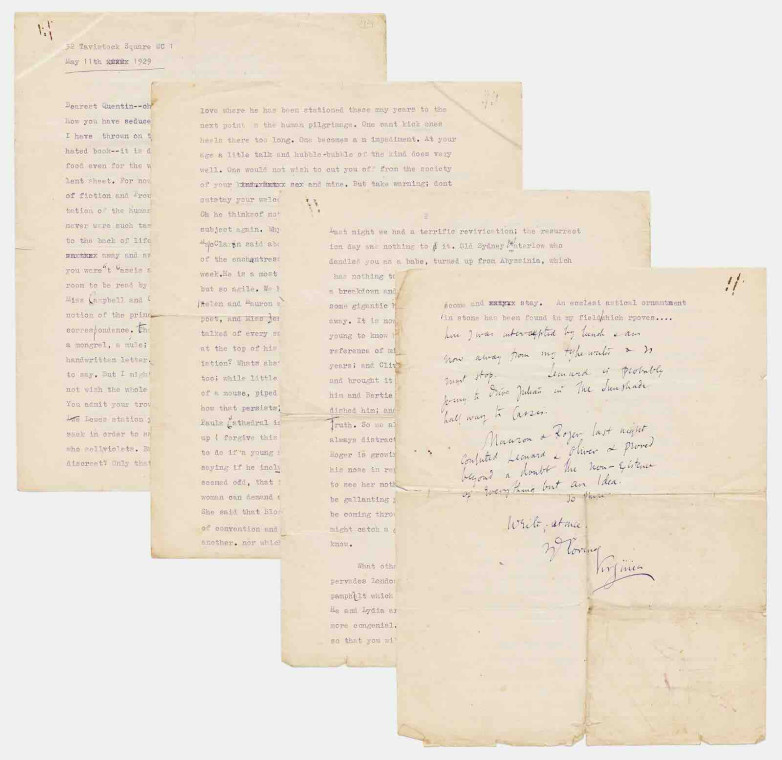
The Virginia Woolf letter



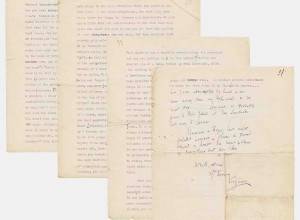
A three-page typed letter signed by Virginia Woolf and a handwritten draft manuscript page by Theodore Roosevelt from his landmark series The Winning of the West will go under the hammer at Nate D. Sanders on March 26.
The Woolf letter with her handwritten edits throughout and concluding with a lengthy autograph note in her trademark purple ink is dated May 11, 1929. Written to her 18-year-old nephew nephew Quentin Bell, she mentions "the last page of my most hated book", likely referring to Phases of Fiction which she was writing at the time.
"How you have seduced me by the charm of your language!" Woolf writes. "I have thrown on to the floor the last page of my most hated book — it is dry as a captain's biscuit — there is no food even for the weevil in it — and turned to this succulent sheet."
The letter ranges across literary aesthetics, the conventions of epistolary form, and the sexual mores of Bloomsbury society, and advises Quentin against becoming consumed by romantic pursuits. She also mentions that Monk's House, the Woolfs' cottage in Rodmell, Sussex, "is able to be rebuilt," a reference to the significant two-room extension then underway, funded by the success of her Orlando (1928). The renovation added a garden bedroom for Virginia and a new upstairs sitting room.
Also leading the sale is a Theodore Roosevelt handwritten draft manuscript from The Winning of the West, laid into volume 1 of a rare Daniel Boone limited edition of Roosevelt's The Winning of the West (G.P. Putnam's Sons, 1900). This is copy #66 of only 200 produced, each containing an original Roosevelt manuscript page.
The draft offered here is one of the most controversial of the entire series. Writing in Chapter 1 The Spread of the English-Speaking Peoples, Roosevelt reflects on the displacement of Native American tribes, including the phrases "white conquest" and "white flood", language that drew widespread attention in contemporary reviews.
The manuscript differs slightly from the printed edition and includes one pencil edit alongside the primary black fountain pen text. The page includes likely Roosevelt fingerprint smudging.